Friday, July 13, 2012

Mega Man 9 and 10


 Mega Man 2 has been my favourite NES game ever since I first played it in the early nineties at a friend’s house. It wasn’t my first experience with the series, I had the rather excellent Mega Man 3 on the Gameboy, but something about Mega Man 2 really grabbed me. The level design was so well thought out, it was a joy to control and it didn’t feature any of the gimmicks like the megabuster of later games. I think most of all it was the music that grabbed me and as far as chiptunes go it can’t be beaten. I remained interested in the series but missed out due to not owning a NES or SNES at the time and UK gaming press’s unwarranted negativity towards the series which put me off many of the games until recently. At least I eventually got the chance to experience what I’d missed out on thanks to a combination of emulation and ebay.


 When I heard that Inti Creates was making a new Mega Man I was very excited for a number of reasons. When I saw those screenshots it was hard not to be excited. Mega Man 9 was to authentically resemble an old NES game, right down to the low resolution graphics, three colour sprite limitation and authentic sounding chip tunes. It was even going to have the option to include sprite flicker, a hardware quirk of the NES that meant sprites would flicker on and off if more than 8 sprites appeared in a horizontal line. On top of that all the gimmicks such as sliding and the megabuster of later games were being left behind in favour of the simpler Mega Man 2 control system. I was also excited to hear about the involvement of Inti Creates who are a great developer that have shown they understand how to make a quality 2D action game with the excellent Mega Man Zero games on the GBA.


 Mega Man 9 certainly looks and sounds the part and thankfully it also plays the part as well. The Mega Man NES games have an undeserved reputation for being extremely tough. They might be tough by today’s standards but in fact are some of the easier games on the NES and back at release were actually criticised for how easy they were. Mega Man 9 however is by far and away the toughest Mega Man in the original series. Thankfully it’s never unfairly hard or frustrating but be warned that if you want to tackle this game it’s not for the faint of heart. I was particularly impressed with the boss designs and also with the inventiveness of some of the weapons. For a series that was getting formulaic with bosses and levels featuring repeating themes between games, there always seemed to be a take on a fire or ice level, it’s nice to see some creative ideas for what had become a stale formula during the NES era.


 With its authentic retro charms, chiptune music and challenging gameplay I would rank Mega Man 9 up there with Mega Man 2 and 3 as the best in the series, high praise indeed. Inti Creates then followed up with Mega Man 10. While it keeps the same retro look of the previous game it ends up feeling somewhat phoned in. There are still some inspired stage designs such as the crazy Sheep Man stage but there’s also Solar Man and Chill Man lazily using the tired fire and ice themes. While nowhere near as good as Mega Man 9 it’s still a worthy entry into the series and a damn sight better than Mega Man 4, 5 and 6.


 One last thing I have to mention is the naff-tastic mock up box art Capcom created to promote the games. They draw inspiration from the god awful original Mega Man box art.


Tuesday, June 26, 2012

Landstalker: The Treasures of King Nole


Landstalker is a game I remember being really interested in but never got around to playing. All the UK Sega magazines were raving about it at the time but being a poor child I couldn’t afford it. When the game was picked for a recent Game Club 199X event over at Hardcore Gaming 101 I found it was the perfect opportunity to give the game a whirl. 

Landstalker is a bag of clichés. You play as the unfortunately named Treasure Hunter Nigel who runs into a spot of bother when he decides to rescue a Wood Nymph named Friday from a band of thieves. The thieves are after Friday because she knows the location of the legendary Treasure of King Nole from the title. So the two strike up a deal and head off to look for the treasure together. Although the story is predictable it’s full of charm and amusing moments, particularly from Friday who has a secret crush on Nigel.


I’d like to say Landstalker is an action adventure game in a similar vein to Zelda but it’s not as well structured. While Zelda’s roadblocks to progression are overcome by gaining new abilities the roadblocks in Landstalker halt progress until you move the story forward by talking to certain NPCs or defeating dungeons. In fact at one point progress is stopped by a literal roadblock caused by a landslide. 


 The first thing that will strike you about Landstalker is the isometric perspective. Fans of the ZX Spectrum games will be well familiar with isometric perspectives from classics like Head over Heels and the Ultimate games but it’s quite unusual for a Japanese action game. It’s probably the game’s greatest strength and weakness. It really gives the world a sense of 3D depth and it looks gorgeous for a Megadrive game. On the downside the game requires a lot of tricky platforming that can be extremely frustrating due to awkward controls and the strange perspective. Objects and the player character lack shadows making jumps and heights very hard to judge. Some of the later dungeons are particularly infuriating and one misjudged jump can lead you to the beginning of the dungeon and some infuriating backtracking. It seems at times that the designers are purposefully using the isometric perspective against you with red herring platforms and other nastiness.

Platforming in isometric games needs to be outlawed!
 
It’s not just the isometric perspective that causes problems but some badly thought out puzzles as well. There’s a few mazes in the game, two of which constitute the most annoying parts of the game. Getting stuck for nearly an hour in a teleporter maze in and giving up for the night after over an hour in the dreaded ‘Green Maze’ section weren’t a high point in enjoyment. Some timed puzzles require such precise timing that they require multiple repeat attempts. Combat is at least is inoffensive. The AI is pretty dumb with the only real tactic is hacking away while keeping your distance.


 I did have a lot of fun with Landstalker but it was spoiled somewhat by later stages when the game started to really punish the player with ridiculous backtracking for the slightest mistake. It really doesn’t lives up to all the praise it got at released but I understand where it came from. At the time it was pretty much the Megadrive’s only response to A Link to the Past until Soleil/Crusader of Centy came out. I more than likely would have loved this game had I played it back in 1993. I’m glad I finally did get around to playing and finishing it and I don’t think I would have managed that if not for Game Club 199X.

The chickens really have awful potty mouths!

Tuesday, May 29, 2012

Xenoblade Chronicles


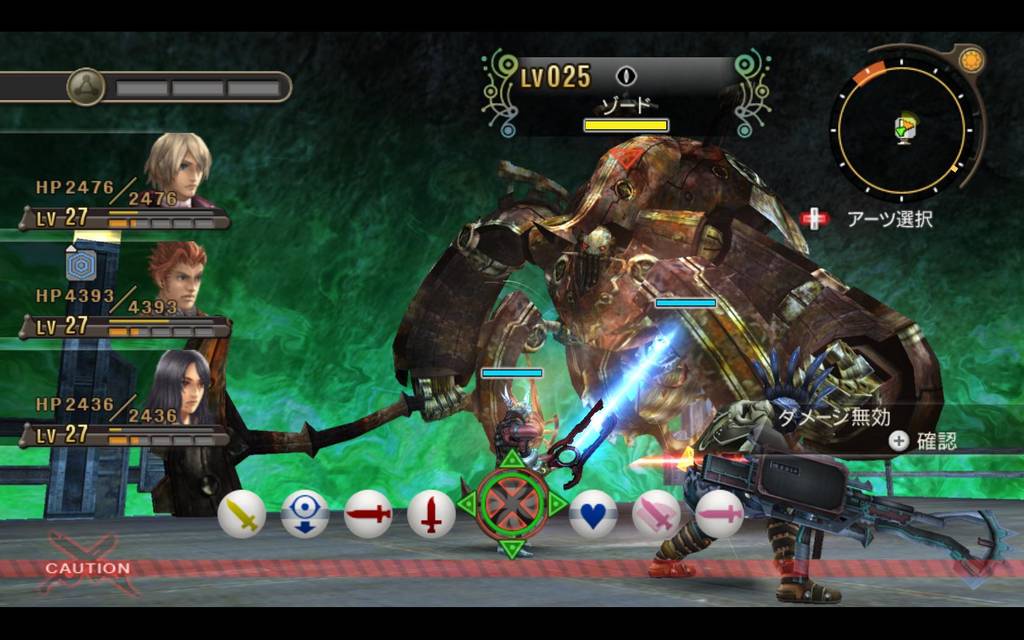
It’s taken a while, about 95 hours on the games clock, but I’ve finally managed to beat Xenoblade Chronicles for the Wii and can safely say that other than Dark Souls it is far and away the best RPG of this console generation for me. Created by Monolith Soft and directed by Tetsuya Takahashi I was initially apprehensive about this game. Monolith Soft’s and Tetsuya Takahashi’s previous games included Xenogears and the Xenosaga series, games that I have a love/hate relationship with. I admired their ambition but some of the existential meandering and lack of clear focus in the gameplay or story meant that I never really enjoyed playing them all that much. Xenoblade dials things back to be a much more focused game and is all the better for it.

 
Xenoblade has one of the most original settings in any game. In the past two gigantic titans fought each other, the Bionis and the Mechonis. This fight ended as both Titans struck simultaneous death blows against each other and have remained locked in position since. The game takes place on the corpses of these Titans. Exploring Xenoblade's world is one of the most intriguing aspects of the game. Each area represents a part of the Bionis and each one is absolutely immense. The sheer scale of the environments is as breathtaking as the vistas you will stumble across. This game is absolutely gorgeous and I’m amazed that these environments are rendered with only very minimal pop up. Although there are some issues with textures looking very low res up close the art design more than makes up for it. It’s one of the best looking games this generation, going to show just far good art direction can go.

Stepping on to the Bionis knee and seeing the Mechonis in the distance is just one of the games 'Wow' moments


The story I found engaging. While starting off as simply a tale of revenge it quickly develops into something a lot more complex. It’s not totally devoid of the existential pondering of previous ‘Xeno’ games but what is there is told in moderation and never strays into the completely ridiculous, which was my problem with the ‘Xeno’ games. The cast of characters that journey with Shulk are excellent, all are memorable and likeable. It completely avoids the traditional cliché JRPG archetypes. For example the main character Shulk can see glimpses of the future due to his sword the Monado, a major plot point in the game. He can see the deaths of others but can’t always prevent these deaths occurring. In a lesser JRPG this would lead to some sort of over the top character breakdown. Shulk however is quite mature and accepts this, never spending overly long contemplating it. It’s refreshing to have a cast react in such a believable manner since it makes them a lot more relatable. A special mention should also go to the brilliant bunch of bad guys who are always entertaining when they showed up. These excellent characters are complimented by a wonderful British cast that provides some excellent voice acting work.


The battle system is probably the best I’ve played since Persona 4. Battles take place in real time and are heavily influenced by MMO games. Your characters will attack automatically when engaged with an enemy. It all seems very like FFXII which I found boring but there’s one big difference. While I found FFXII played itself once gambits were set up (I literally beat the game one handed since it was the only game I could play with a broken wrist at the time) there’s an awful lot of strategy involved in Xenoblade. Positioning and status effects play a big role. Shulk’s visions of the future also play a big role, allowing you to see upcoming enemy attacks and allowing you to interrupt or counter them. There’s a whole heap of other subsystems at play that I don’t want to bore you with but suffice to say that the battle system is complex but always enjoyable.


Xenoblade is a huge game and the 95 hours I spent on it were really only scratching the surface. There’s a massive amount of sidequests to complete, a little too much if you ask me. If you are playing the game just to see the story like I was you can just take as many of the sidequests as you can. You’ll end up completing most of them just wandering about exploring the gorgeous landscapes and will allow you to level quicker. I heard some people complaining about having to grind for some bosses in the game but I never had a problem and as long as you take your time exploring you shouldn’t either. It’s a long game but the ending is hugely satisfying. The soundtrack as well is probably the best videogame soundtrack since Nier. Coming out at the tail end of the Wii’s life when the system is all but dead means that Xenoblade probably won’t get the sales it deserves. If you own a Wii and like RPGs you really have to experience this wonderful game.


Saturday, May 26, 2012

Phantasy Star 2


 Phantasy Star 2 takes place 1000 years after the events of the first game. You play as Rolf who has been having a recurring dream about a girl, who resembles Alis from the first game, fighting a demon.  Rolf is a member of the security forces of the planet Mota. What fans of the first game will immediately notice is that the lush greenery and biodomes are a far cry from the desert planet Motavia of the first game. The environment and every facet of life of the three planets in the Algol system are now controlled and regulated by a computer known as Mother Brain. Nobody knows who created Mother Brain or even where it’s located but they are happy to let it control life in the Algol system as long as they can live a care free life without having to worry about trivial matters like having a job. However the paradise created by Mother Brain has started to unravel. A ban has been placed on interplanetary travel. Also the climate control and bio factories of Mota are malfunctioning causing a drought and leading to the creation of dangerous bio monsters. It is Rolf’s job to investigate what is causing these problems. He is joined by his companion Nei, a half human, half biomonster female that he befriended.


Phantasy Star 2 debuted on the Megadrive in 1989 in Japan and during 1990 in the West, making it probably the first RPG on a 16-bit system. In fact it was released a few months before the original Final Fantasy in the US. While now it might seem a bit archaic, at the time it was quite far ahead of its time in many regards. In terms of narrative it was far ahead of anything else at the time to my knowledge. The story seems quite simplistic but holds some hidden depths. The people of Algol relying so heavily on Mother Brain have become quite weak, one NPC even asks ‘why should I work?’. The game also features what is probably the first death of a playable character in a RPG, almost a decade before FFVII’s more famous example. What most impressed me however was the superb twist and ending.  It was quite unexpected and for a game of its era and very brave of the developers. I won’t spoil it but will say it was definitely worth playing through to experience it.

The use of static anime cutscenes was another innovation

If you do want to experience that ending though be warned; Phantasy Star 2 is a frighteningly tough game, possibly the toughest RPG to ever come out of Japan. Just like its predecessor, right from the start of the game you are in danger of being overcome by even the simplest random encounter. You have to grind like crazy to gain enough experience and money to equip yourself and be at a level where you can tackle each dungeon. The amount of grinding required can be painful but it was expected from RPGs at the time. The game is more influenced by western RPGs like Wizardry than the more accessible Dragon Quest type RPG.

The battle system is quite simple but elegantly designed. There’s not much to it other than attacking and healing. Spells are a valuable commodity and are usually saved for deadlier encounters. Most of the challenge comes from the resource management required to survive a trek into the games huge and confusing dungeons. The game operates on an auto battle system whereby your characters will keep attacking unless you choose to interrupt and give the characters an alternative strategy. This makes for an extremely quick battle system that gives the player plenty of control while making fights with less challenging enemies relatively painless.


One thing I really love about this game is how you acquire new allies. While other games have you seeking out new allies on your travels, in Phantasy Star 2 your allies will seek you out. Every so often when you come to a new town or dungeon if you return to your starting home you will meet a new ally that has heard of your exploits and has come seeking you out. There are eight characters to choose from, each with different skills, strengths and weaknesses. There’s a doctor who is good at healing, two characters that are good at either killing robots or bio monster enemies, a thief who can steal items from shops and a hunter who can attack multiple enemies at once. Some characters are more useful than others at different points of the game, for instance there are times when the bio monster specialist becomes useless when killer robots are sent after you, so careful choice of what characters you use is very important. Having characters with different specialities might sound standard for an RPG but at the time it was pretty revolutionary. Even having a choice of which characters to take in your party was unusual at the time. Most other RPGS of the era let you create your own characters or allowed very limited or even no specialisation after the characters role was chosen. Phantasy Star 2 had a lot more depth to the battle system than any RPG at the time despite seeming quite simplistic today.


The party lost in another confusing dungeon

Now for the bad stuff unfortunately and this game has quite a few issues other than being so grind heavy. In ways I feel that the game is actually worse looking than its predecessor on the lowly master system. While the enemies and attack animations during battles are fantastically animated and look much better than the static enemies of even the later SNES Final Fantasy the same background is used during each battle as opposed to the backgrounds changing depending on your location in the original Phantasy Star. Also the gorgeous first person dungeons of the original are replaced by dungeons with a top down view exactly like the world map and are much less visually appealing. I’m not finished with the dungeons however because whoever designed them is an absolute sadist. Each one is a huge sprawling mess of multiple floors and elevators. You can quickly become disorientated in them and it’s not helped by the use of a limited set of tiles in each dungeon making different areas seem very similar. The layouts are so confusing that the game came packaged with a players guide featuring maps of all the dungeons in the game and if you plan on finishing this game I suggest you use them or a walkthrough. Google the maps if you are interested in seeing just how convoluted they are. The original Phantasy Star had some complex dungeons but at least you could map them out using graph paper due to the first person view it used.

One last thing is the ‘bunny’ enemies you encounter later on. They sound cute but are in fact zombie bunnies that have animations of their intestines falling out and them putting them back in their stomachs. Even more terrifying is that they attack with their intestines. Bunnies should be cute Sega!

These guys are just... horrible!

 Phantasy Star 2 was a very interesting experience. It was equal parts fascinating to see just how far ahead of its time it was. However it was also equal parts infuriating when the game reminded you of its archaic ways when you got lost in yet another confusing dungeon or realised you have an hour of thankless grinding ahead of you just so you could afford the latest equipment needed to stand a chance in the next dungeon. I do believe it was a worthwhile experience and the cracking ending was reward enough. I do however plan on not playing this game ever again! One final tip for anyone wanting to take the plunge; once you get the thief character find out how to steal the viziphone item.  It allows you to save anywhere, and trust me, you will need it.

Later Aces!

Tuesday, May 22, 2012

Retro Game Challenge


I’m a huge fan of GameCenter CX. Fuji Television’s show about one middle aged comedian trying to beat old videogames is far and away the best TV show ever made about videogames and if you haven’t discovered it yet then I suggest you search for the fan translated episodes on Youtube. Retro Game Challenge is the first of two games based on the TV show and localised for the US by XSeed games. It also happens to be one of the best DS games available.

GameCenter CX, the TV show, celebrates the old 8, 16 and 32-bit glory days of gaming and revels in nostalgia. It’s fitting then that Retro Game Challenge is a love letter to the Famicom era of videogames in Japan. The story is that you have been sent back in time and turned into a child by Arino, the presenter of GameCenter CX, and must complete retro game challenges before you can return. A great excuse then to play through some excellent 8-bit styled games.

Ninja Haggleman in action with the bottom screen to show how the game is presented

Presentation is top-notch in this game. The bottom screen is taken up by two children, one represents you and the other representing Arino as a child, sitting in front of the TV and games console. The console is never named as a Famicom but it’s pretty obvious what it represents. From here you can talk to Arino or select games and read their manuals. Every game has a stylised pixelated retro look to make it seem like it was originally released on the 8-bit Famicom. Sprites only have 3 colours and the colour palette is limited. One of the most impressive features is the magazine collection you acquire throughout the game. These feature tips, videogame charts and previews of upcoming games. They are written with a very amateurish and enthusiastic way that is perfectly fitting for a newsletter or magazine from that era.

If you like your Hudson Soft shooters, you'll love Star Prince

New games are released to the player once challenges in the previous game are completed. One of my favourite little details about the game is how each game represents a different era of the NES/Famicom. The games become more complex and elaborate as the months and years role on.  The first game ‘Cosmic Gate’ is a fantastic galaga clone, while later ‘Haggleman’ represents the platformers heyday after the release of Super Mario Brothers. The last two games are Guadia Quest, an RPG very much in the 8-bit Dragon Quest/Final Fantasy mould and Haggleman 3, which feels like the exploration focused  platform games from the end of the Famicoms life such as Adventure Island 4, Bionic Commando or Clash at Demonhead.

The highlight of the package is definitely Guadia Quest, an excellent and sizable RPG

There are 8 games in total although two of them are rehashes of other games, namely Haggleman 2 and Rally King SP. What is remarkable is that each game would have been considered a minor or major classic if released in the 1980’s on the Famicom. Cosmic gate is a superior Galaga clone. Haggleman and its sequel are fun if simplistic plaformers. Rally King is the weakest game in the bunch but still a great game that reminds me of Neo Driftout on the Neo Geo. Star Prince is a superb vertical shmup that plays very like the classic Hudson Soft games on the Famicom and PC Engine. Guadia Quest is the highlight of the package and is a brilliant 15-20 hour 8-bit RPG. Last is Haggleman 3 and my only complaint about this game is that it’s only 4 stages long. It’s a great mix of Ninja Gaiden with light exploration elements.

Ninja Haggleman 3 is exellent if a little short

There’s so much game packed into this cartridge that it’s an absolute bargain. Even outside of the games there’s a whole heap of charm and humour. The magazines and manuals are fun to read and if you don’t like or have trouble with some games there’s cheats to be found in these magazines that can help you complete any of them. If you are a fan of GameCenter CX there are some very humourous lines from the young Arino especially when he comments about his gaming prowess when he gets older. The only disappointment is that there was a second GameCenter CX game that isn’t getting localised so I have to wait for a fan translation before I can enjoy it.